Yoga Props for Beginners After 40: What to Know
October 16, 2026
Yoga props for beginners can look like a shelf full of extra things to figure out. If you are starting yoga after 40, you may already be thinking about the poses, the pace and where to put your mat. You do not need to learn every prop before your first class. Begin by asking the teacher which items you will use and how to set them up.
Blocks, straps, blankets and bolsters serve different purposes. Treat this guide as an introduction to the objects you may see, with questions to take to your instructor. The right arrangement depends on the movement and on you.
What are yoga props for beginners?
A prop is an item used alongside your mat during practice. A block is a firm support with surfaces of different heights. A strap is a belt-like length of material. A bolster is a cushion, while a folded blanket can provide another surface or layer. The instructor should explain which item belongs in the movement you are learning.
Yoga.org’s introduction to props demonstrates examples of studio equipment, including blankets, blocks and bolsters. It is useful for recognising the items. Ask your own teacher to demonstrate their use in your class rather than copying a setup without explanation.
Ask about blocks and straps before the class moves on
When a teacher introduces a block, ask where it goes, which surface should face upward and when to move it. You should be able to see the demonstration clearly. If the equipment or instructions are unfamiliar, ask the teacher to show you again.
For a strap, ask how it should be held or adjusted for that particular movement. You do not need to guess the length from the person beside you. Ask what you are meant to notice and how to leave the position comfortably.
A useful first-class goal is to understand one setup at a time. You can learn the names and arrangements as they appear in the lesson.
Understand blankets and bolsters
Blankets and bolsters may appear in different parts of a class. A blanket can be folded in different ways, and a bolster has its own shape and firmness. Ask the instructor which item they mean and how it should be arranged before you settle into a position.
Check the studio’s equipment policy before your visit. Ask whether props are provided, whether you need to bring anything and how shared items are cleaned. If you prefer your own equipment, ask whether that is practical in the class you have chosen.
Let instruction guide the setup
The National Center for Complementary and Integrative Health recommends learning yoga with a qualified instructor. It notes that injuries can occur and that some people may need changes to poses or practices. Equipment alone does not establish whether a movement is suitable for you.
If you have a health condition, an injury or concerns about your individual needs, discuss those with your health care provider and instructor. NCCIH also advises newcomers to avoid extreme practices such as headstands and forceful breathing. There is no need to use a prop to pursue a more demanding version of a movement.
Choose what you need after trying a class
You can ask about studio equipment before buying a collection of your own. After a visit, note which items you used, what the teacher explained and what remains unclear. If you plan to practise at home, ask which instructions and equipment apply to that plan.
For more first-visit questions, read Starting Yoga After 40. You can also browse studio locations and follow their official links for current class details. If you are comparing approaches, our yoga and Pilates guide offers another starting point.
Give yourself room to learn the equipment gradually. One clear explanation is more useful than arriving with a bag of unfamiliar props. You can use your journal to save questions for your next class.
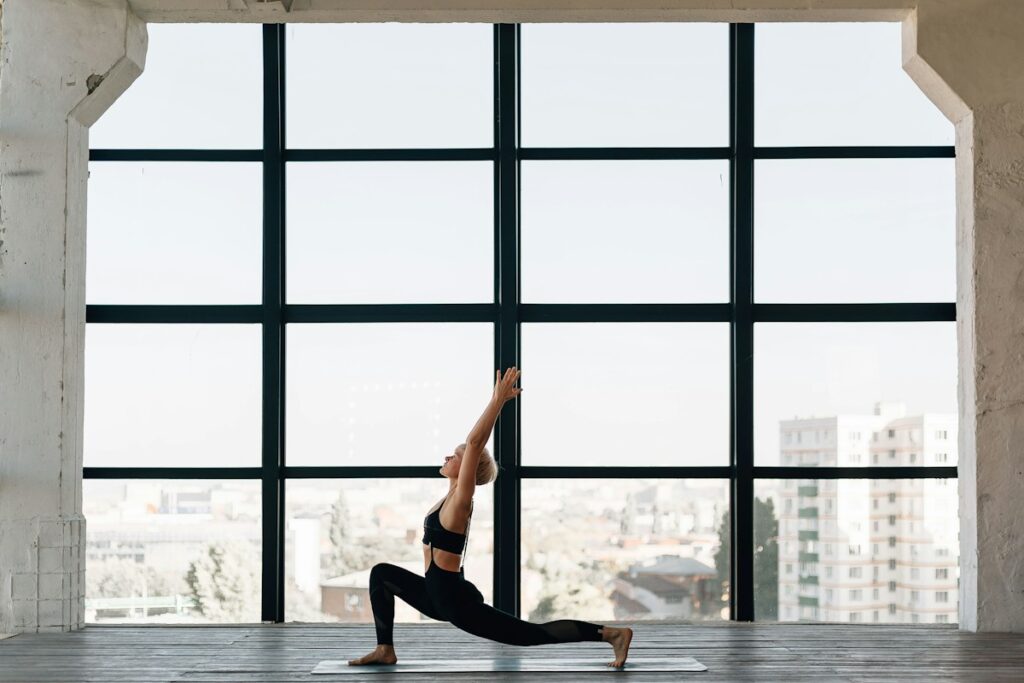
General educational information, not individual medical advice. Sources checked October 16, 2026: NCCIH yoga safety guidance and Yoga.org’s prop demonstration. Editorial photograph by Dmitriy Frantsev / Unsplash, reused from this site’s licensed library under the Unsplash License; it does not depict a listed studio or imply endorsement.